Water Damage Restoration in Palm Coast, FL & Surrounding Communities

    (386) 245-9133
    Palm Coast Water Damage Contractors Logo
    (386) 245-9133Get Water Damage Help
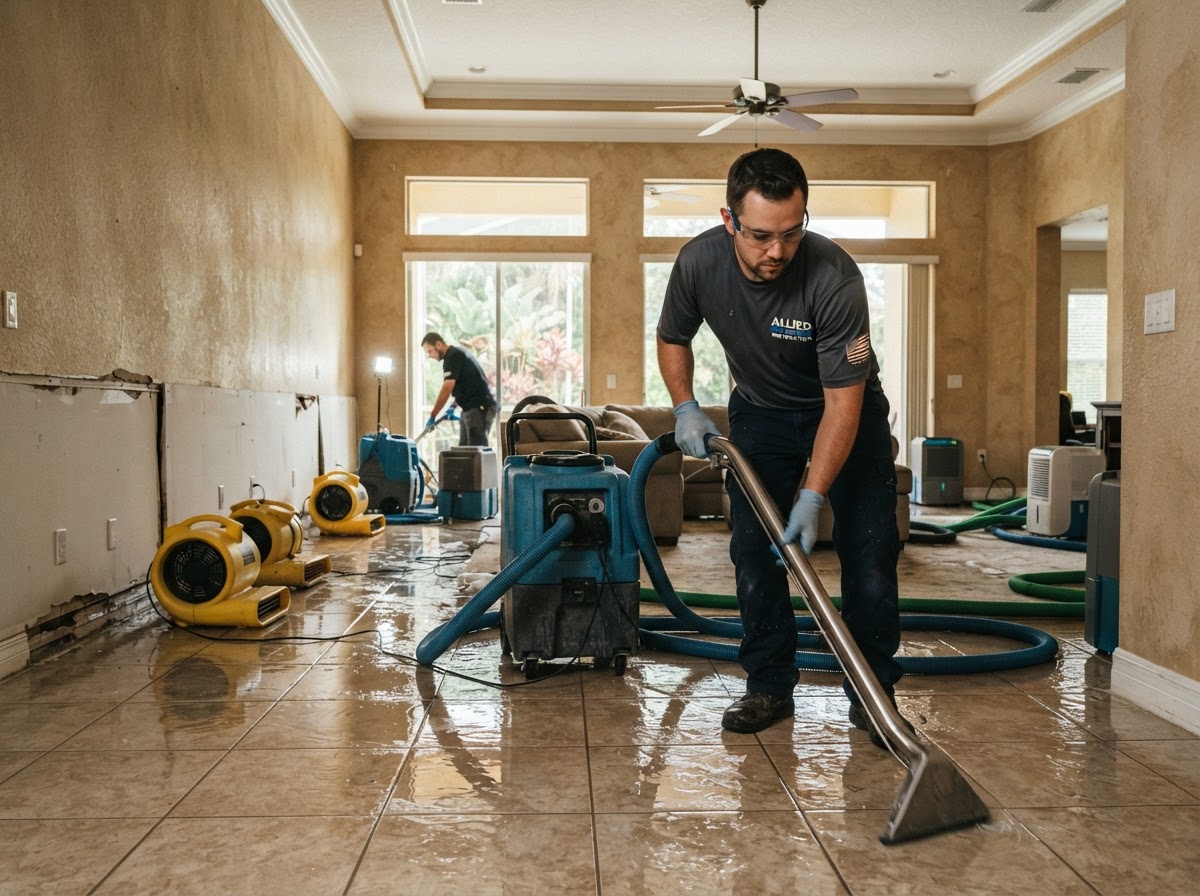
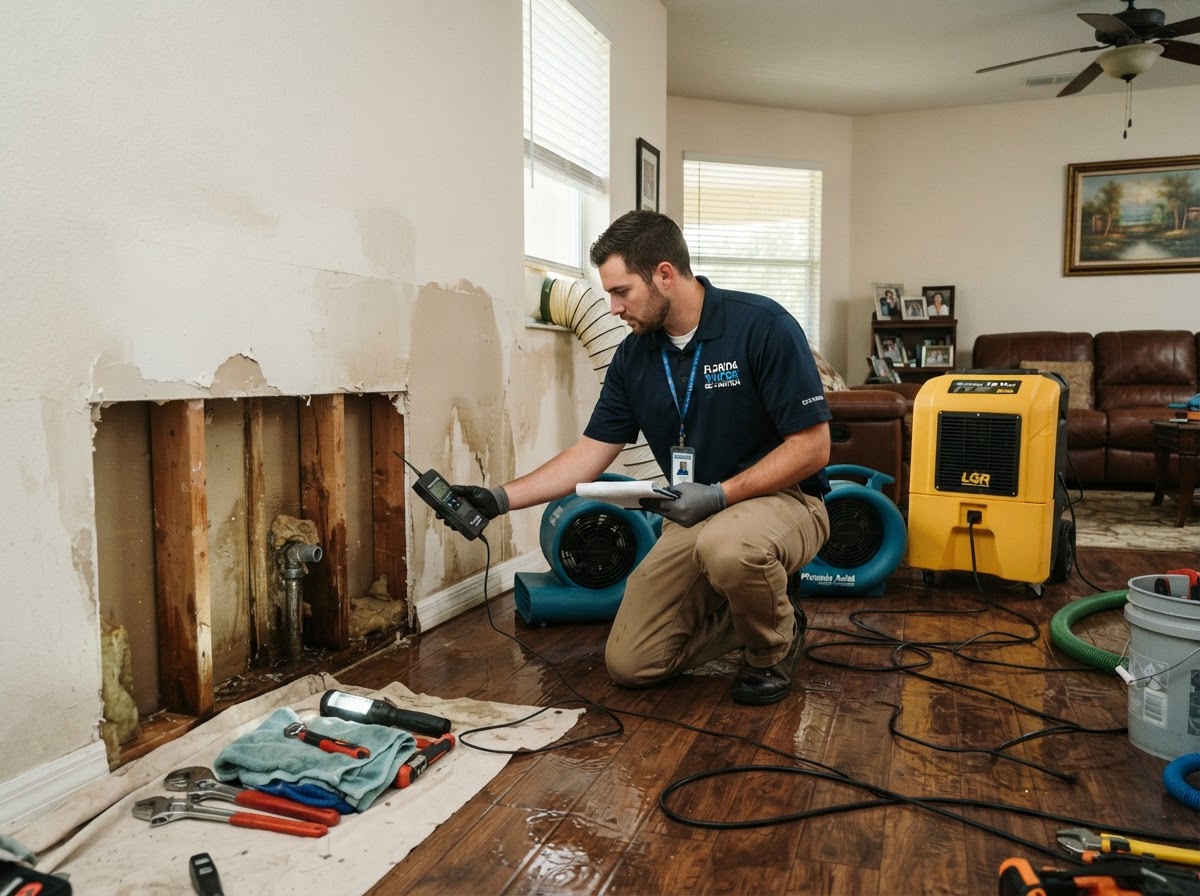
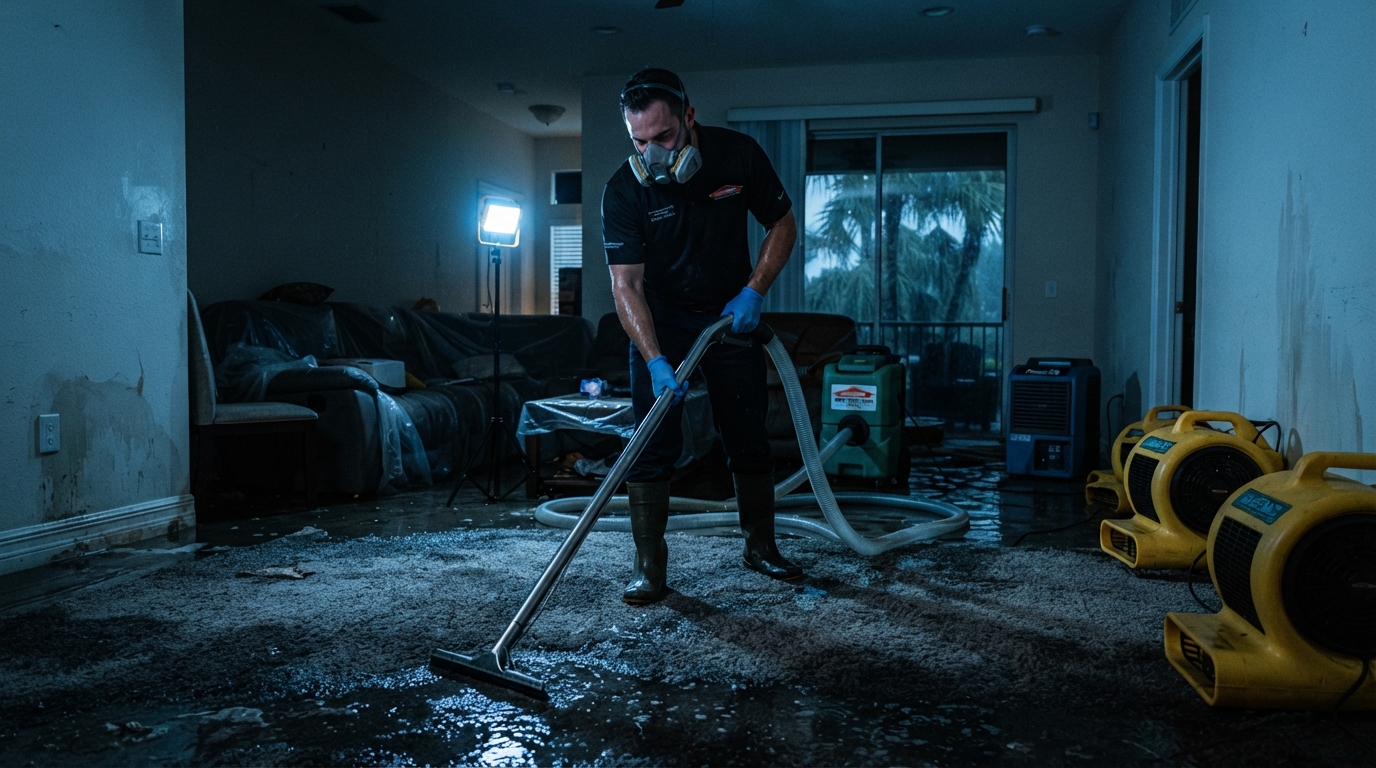
    Water damage restoration crew extracting water from a Palm Coast home

    Water Damage Help in Palm Coast, FL

    Water Damage Restoration in Palm Coast, FL

    Water Removal, Extraction & Property Drying Near Palm Coast

    When water enters a Palm Coast home or business — from a burst pipe, appliance leak, roof intrusion, bathroom overflow, or storm-driven rain — the priority is getting the water out and the structure drying as quickly as possible. Palm Coast Water Damage Contractors connects property owners with water removal, extraction, structural drying, and cleanup services for residential and commercial water loss across Palm Coast and surrounding Flagler County communities.

    • Water Removal & Extraction
    • Structural Drying
    • Leak & Flood Cleanup
    • Residential & Commercial

    Request Water Damage Service

    Tell us about your situation and we'll follow up to help.

    Your information is used only to contact you about your service request.

    Top Rated Water Damage Restoration Company Near Palm Coast

    Google

    Facebook

    Yelp

    Angi

    HomeAdvisor

    Local Water Damage Help

    Water Damage Cleanup for Homes & Businesses in Palm Coast

    Water intrusion does not wait, and neither should the response. Standing water, saturated flooring, and wet drywall continue to cause damage the longer they sit — which is why prompt water removal and structural drying matter for every Palm Coast property.

    Water damage restoration in Palm Coast addresses water intrusion from a wide range of sources: plumbing failures, supply line breaks, appliance leaks, water heater failures, roof leaks, bathroom and toilet overflows, HVAC condensate overflows, and storm or hurricane water intrusion. Each source leaves moisture in different materials and requires a different drying approach.

    The visible water is only part of the problem. Water travels along the path of least resistance — under baseboards, into wall cavities, across subflooring, and into ceilings below. Even after the standing water is gone, bound moisture remains trapped inside drywall, insulation, framing, and flooring. That trapped moisture is what drives secondary damage if it is not found and dried.

    Water removal and structural drying are two different steps. Extraction pulls the bulk water out of the structure. Drying uses air movers and dehumidifiers to draw the remaining bound moisture out of the materials themselves. Both steps are necessary — and in humid Palm Coast conditions, dehumidification is especially important because moist coastal air can slow the drying process and allow secondary moisture to develop.

    Whether the loss is a single-room plumbing leak in a Palm Coast home or a larger commercial water event affecting multiple rooms or units, the goal is the same: remove the water, find the hidden moisture, and dry the structure so the property can be returned to a stable, dry condition.

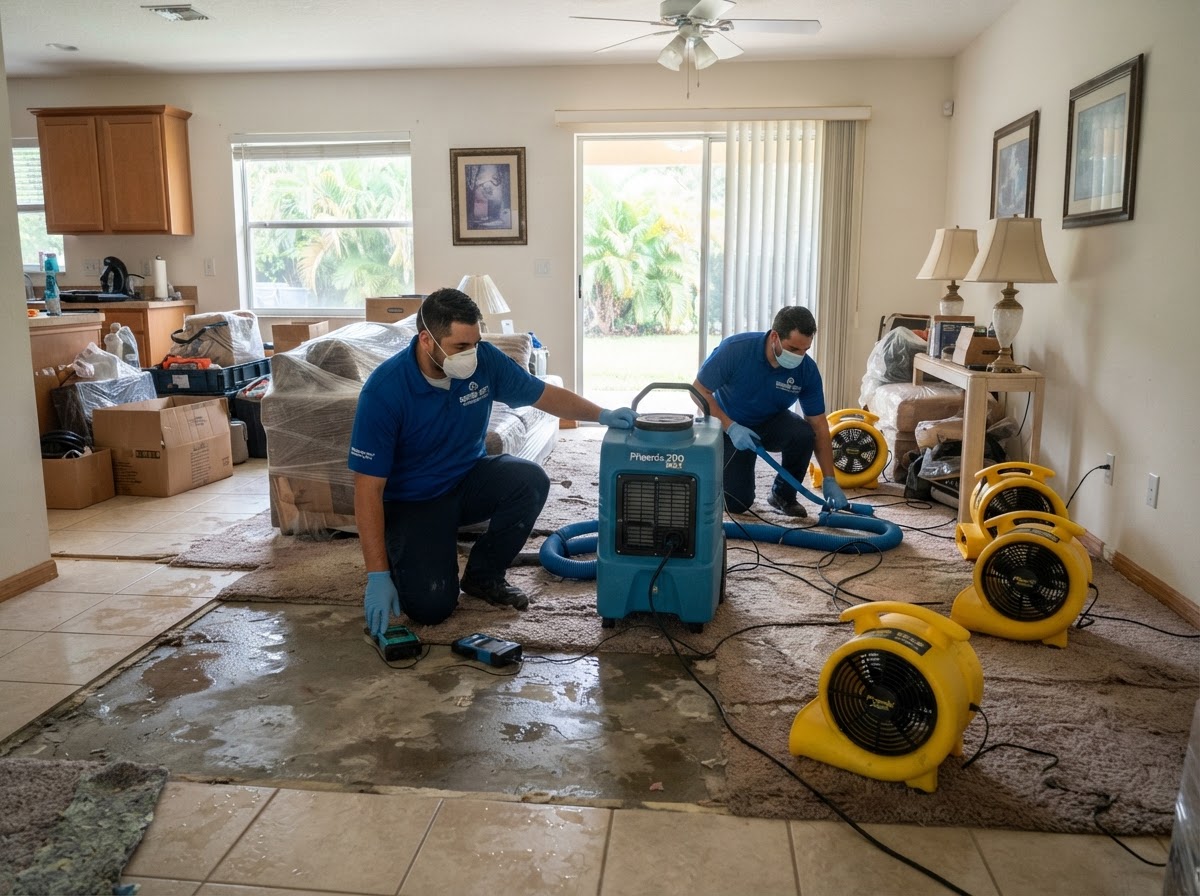
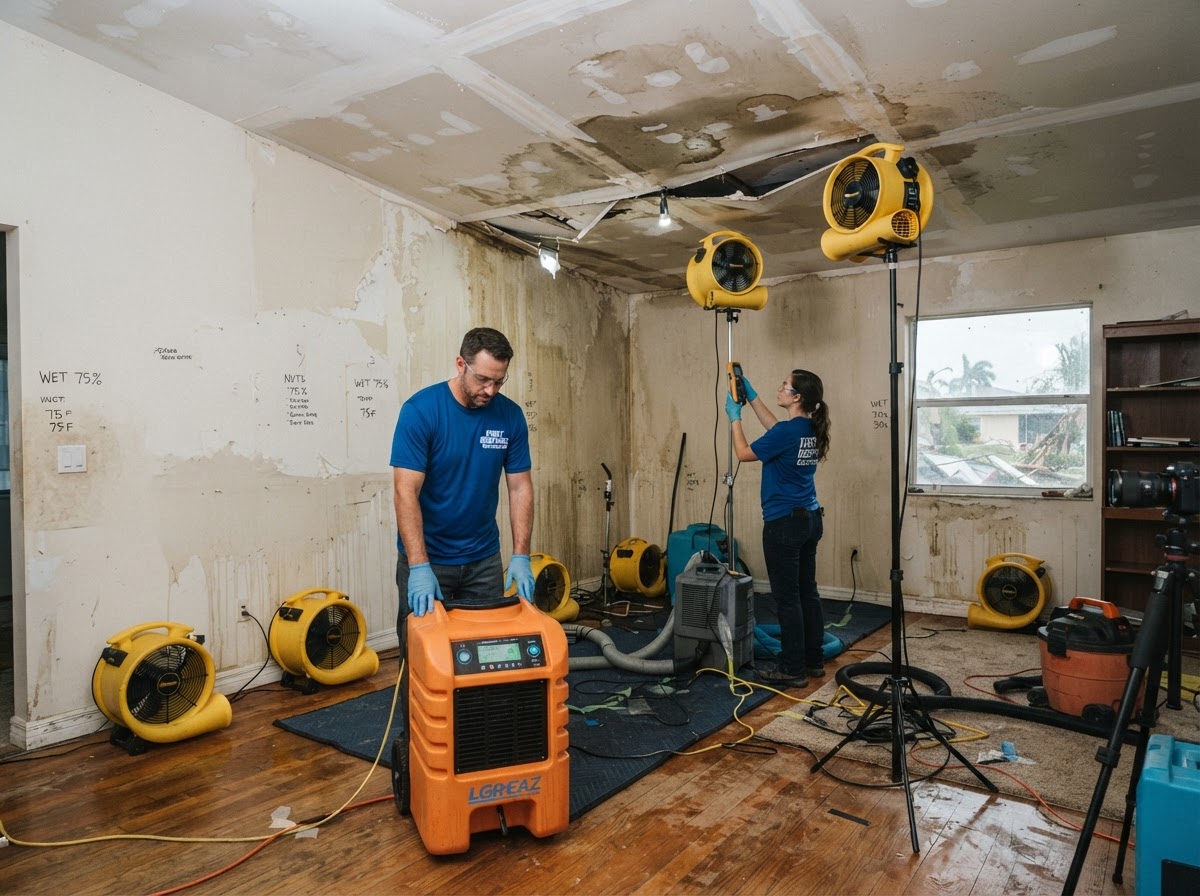
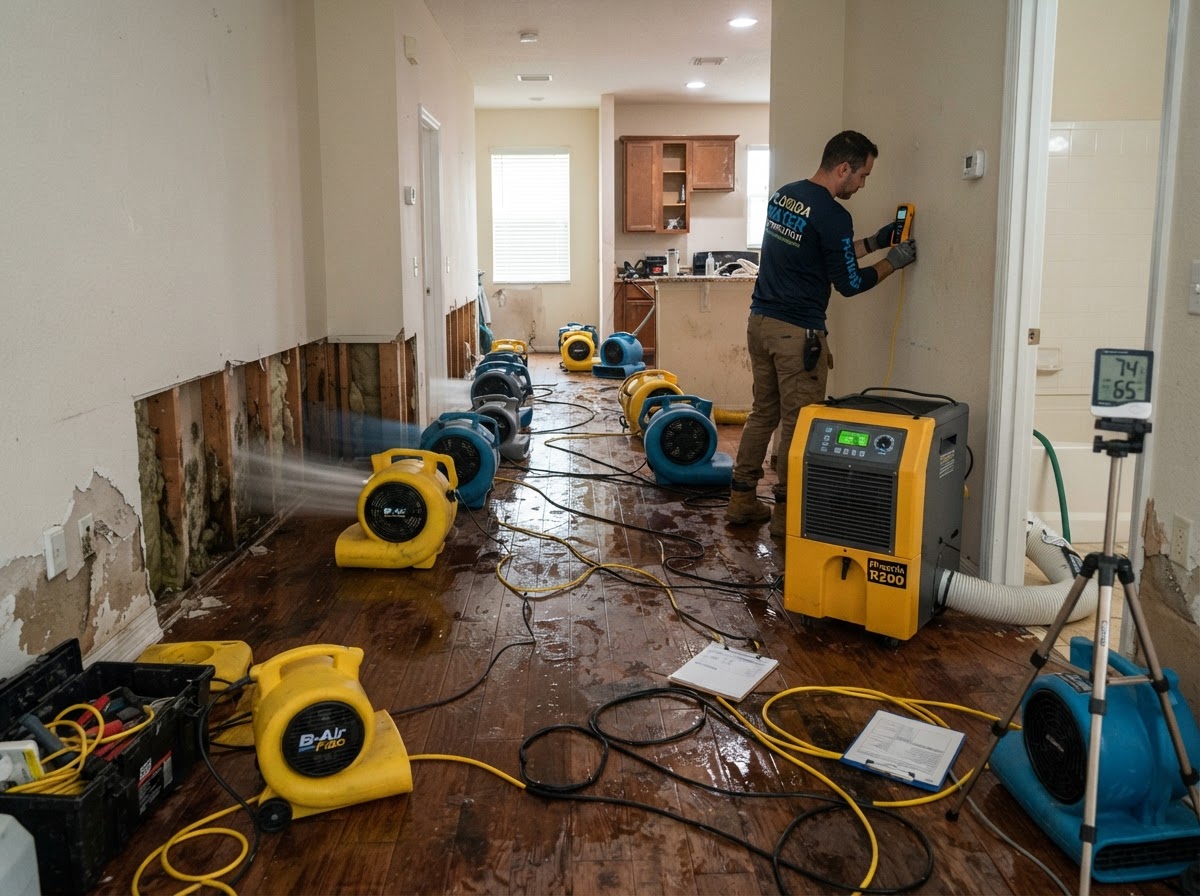
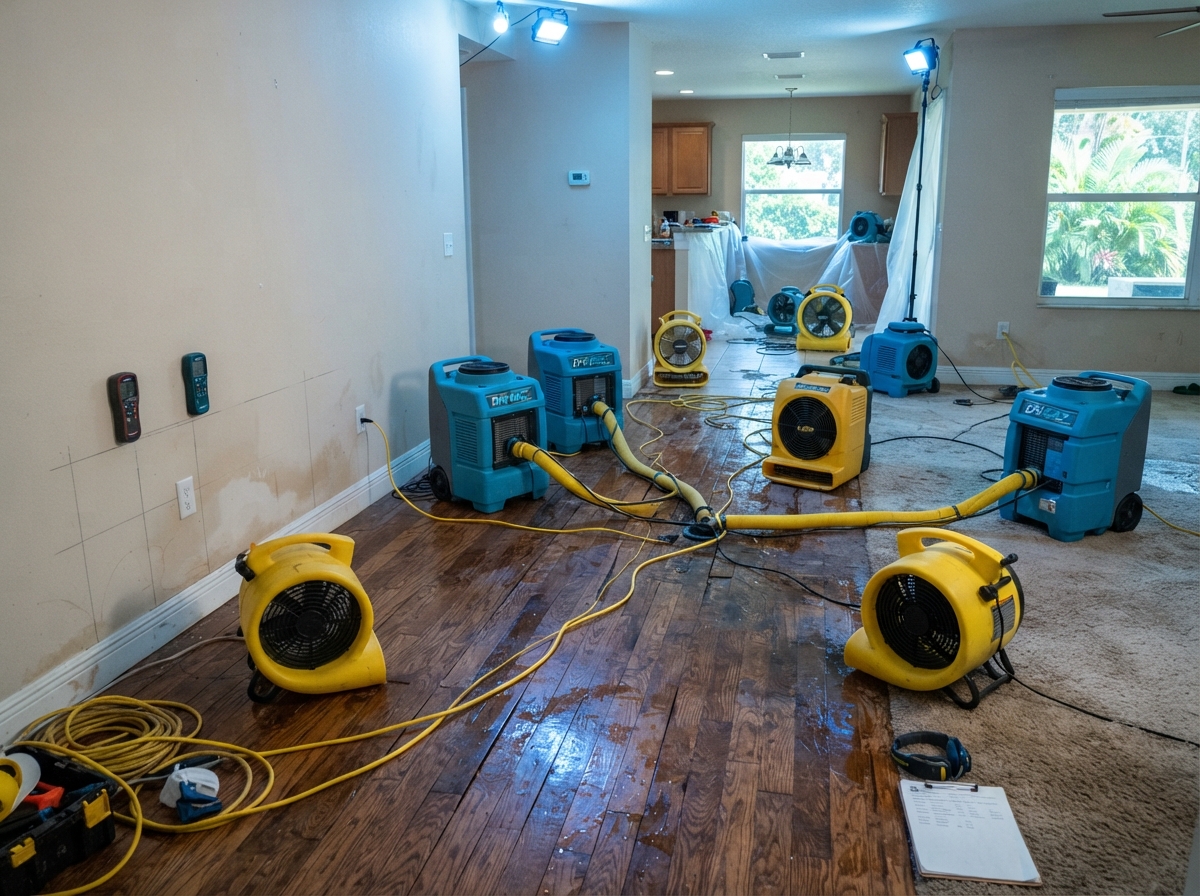
    Commercial air movers and dehumidifiers drying water damaged flooring in a Florida home

    Moisture Inspection

    Hidden moisture detection

    13 Core Services

    Water Damage Restoration Services in Palm Coast, FL

    From emergency water extraction to structural drying and hidden moisture detection, every service below addresses a specific type of water loss common to Palm Coast homes and businesses.

    Water Damage Restoration

    Complete water damage restoration for Palm Coast homes and businesses — from initial inspection and water removal through structural drying and final cleanup. We address plumbing leaks, appliance failures, roof intrusion, and storm water so the property can be returned to a dry, stable condition.

    Learn About Water Damage Restoration

    Emergency Water Removal & Water Extraction

    Standing water continues to spread into flooring, walls, and cabinetry the longer it sits. Emergency water extraction uses commercial-grade pumps and vacuums to pull bulk water out of the structure quickly, limiting how far moisture travels and reducing the drying timeline that follows.

    Learn About Water Extraction

    Flood Damage Cleanup

    Flood water — whether from heavy rainfall, storm surge, or rising groundwater — often carries soil and contaminants into a building. Flood damage cleanup includes extracting the water, removing affected contents, cleaning salvageable materials, and beginning the drying process for the structure.

    Learn About Flood Cleanup

    Sewage Backup & Black Water Cleanup

    Sewage backups and black water intrusion introduce biological contaminants that require careful containment and cleanup. Contaminated water is removed, affected porous materials are extracted, and the affected area is cleaned and prepared for drying following appropriate contamination protocols.

    Learn About Sewage Cleanup

    Burst Pipe & Plumbing Leak Cleanup

    A burst pipe or supply line leak can release hundreds of gallons of water into walls, ceilings, and flooring in a short time. After the source is stopped, water extraction and drying focus on the affected cavities, saturated drywall, insulation, and flooring before secondary damage develops.

    Learn About Burst Pipe Cleanup

    Storm & Hurricane Water Damage Restoration

    Florida storms and hurricanes drive wind-driven rain, roof intrusion, and flooding into Palm Coast properties. Storm water damage restoration addresses water removal, drying of saturated materials, and inspection of hidden moisture in walls, ceilings, and attics after the storm passes.

    Learn About Storm Water Damage

    Structural Drying & Dehumidification

    Removing standing water is only the first step. Structural drying uses air movers and dehumidifiers to pull bound moisture out of drywall, framing, flooring, and cabinetry. Dehumidification also lowers indoor humidity so secondary moisture and mold growth are less likely to develop.

    Learn About Structural Drying

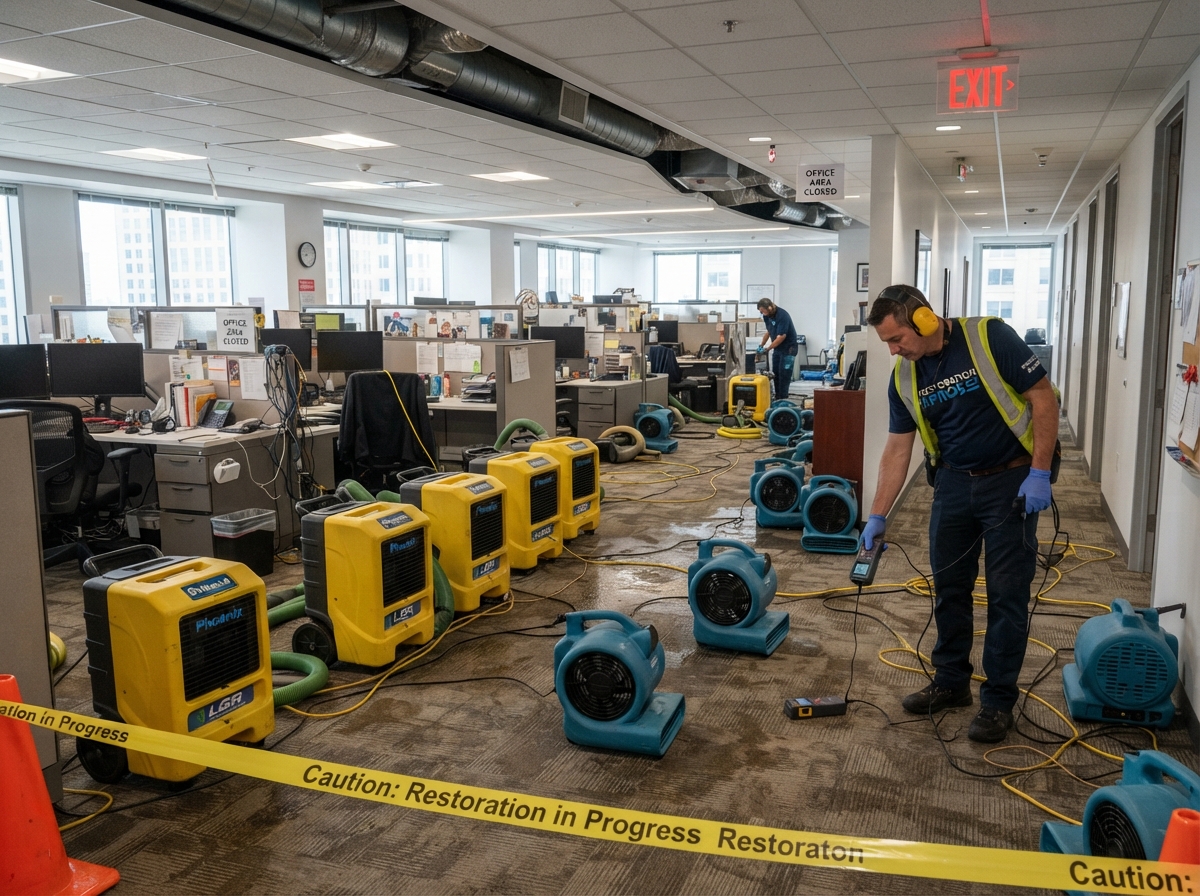
    Commercial Water Damage Restoration

    Water loss in an office, retail space, restaurant, or multi-unit property can disrupt operations and affect inventory, equipment, and tenant spaces. Commercial water damage restoration is scoped to the size of the loss and works around the needs of the business where possible.

    Learn About Commercial Water Damage

    Water Heater Leak Cleanup

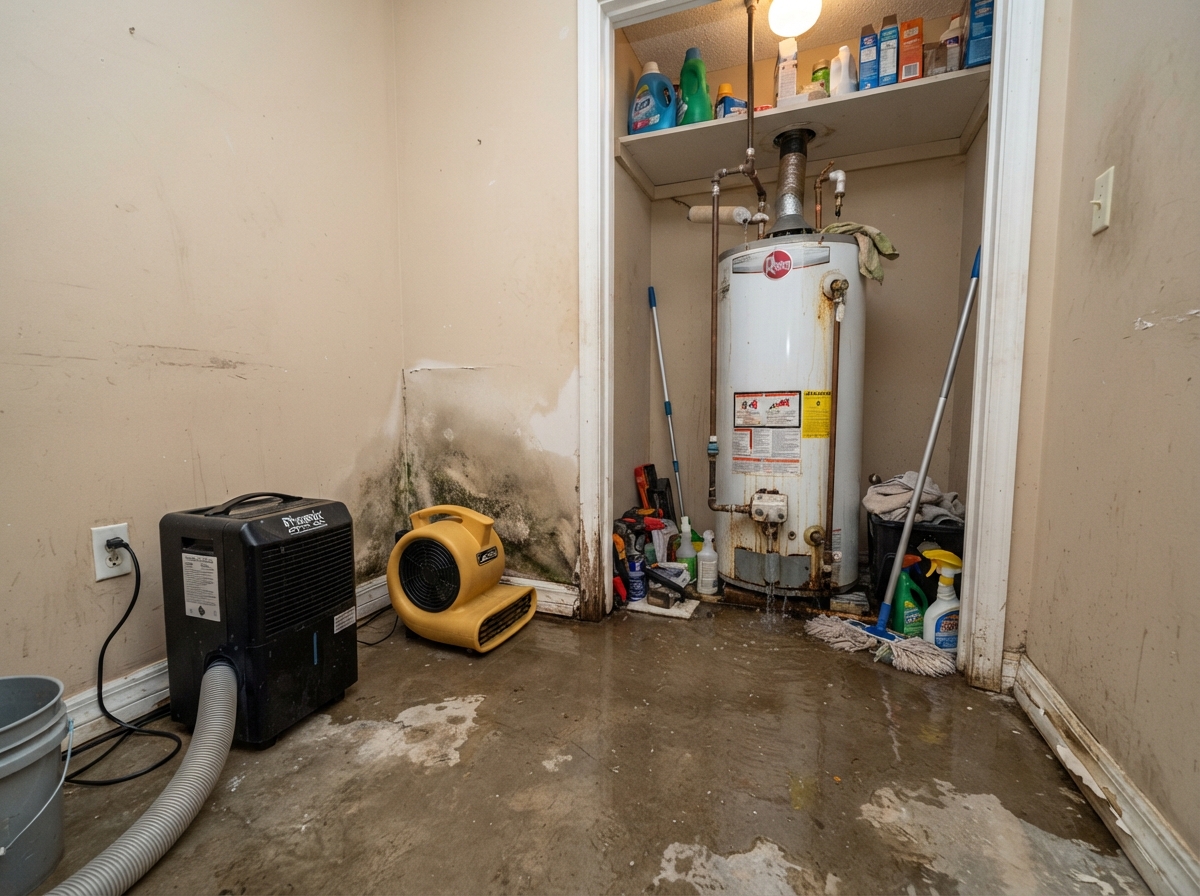
    A leaking or failed water heater can release slow, hidden water into a closet, garage, or utility room — or flood the floor when the tank ruptures. Water heater leak cleanup includes extracting the water, drying nearby walls and flooring, and inspecting for moisture that traveled behind baseboards.

    Learn About Water Heater Leak Cleanup

    Washing Machine Overflow & Laundry Room Water Damage Cleanup

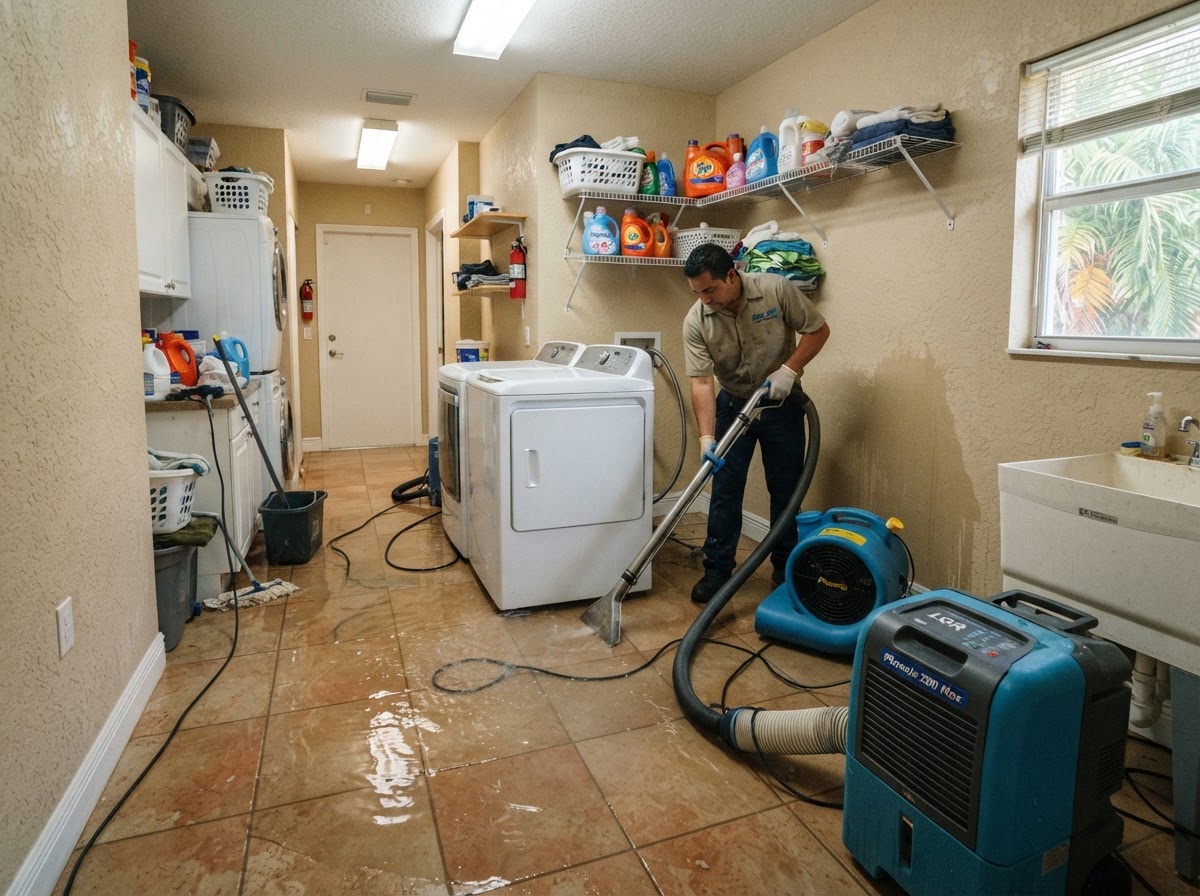
    Washing machine supply hose failures and overflows send large volumes of water across laundry room flooring and into adjacent rooms. Laundry room water damage cleanup extracts the water, dries flooring and wall cavities, and checks for moisture under cabinets and behind nearby baseboards.

    Learn About Washing Machine Overflow Cleanup

    Toilet Overflow, Shower & Bathroom Water Damage Cleanup

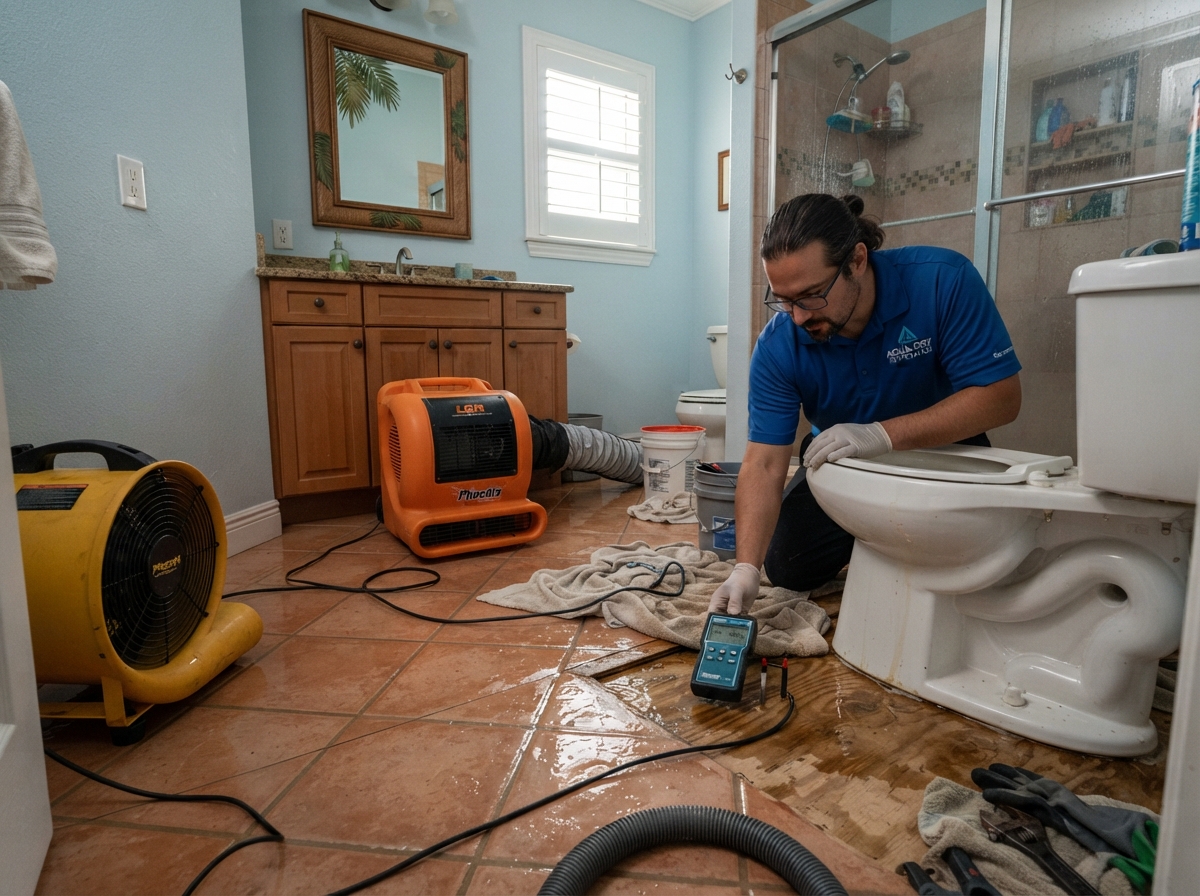
    Toilet overflows, shower pan leaks, and tub overflows introduce water — and sometimes contamination — onto bathroom flooring and into subfloors and ceilings below. Bathroom water damage cleanup addresses the water source, extracts standing water, and dries affected materials and cavities.

    Learn About Bathroom Water Damage

    AC/HVAC Condensate Drain Line & Appliance Leak Cleanup

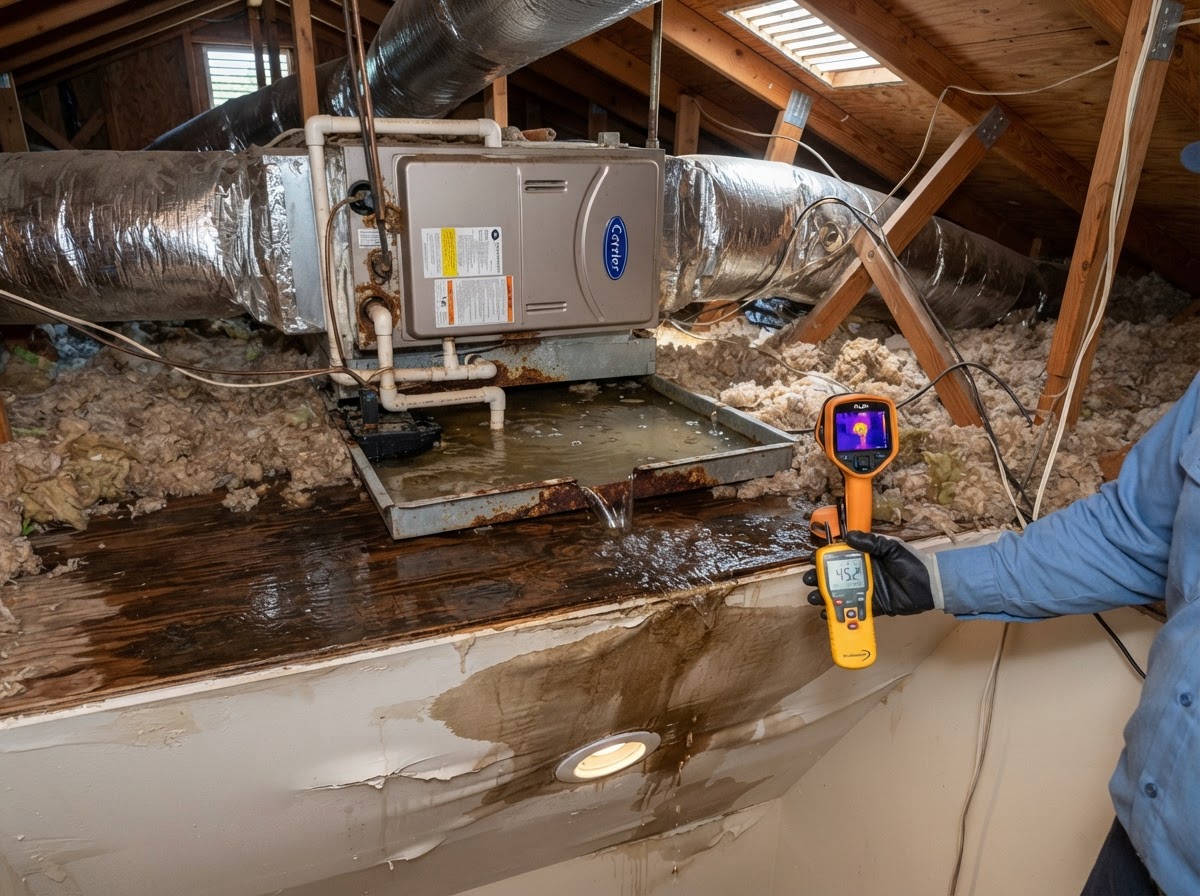
    A clogged HVAC condensate drain line can overflow for days, saturating ceilings, drywall, and flooring near the air handler. AC condensate and appliance leak cleanup removes the water, dries affected materials, and inspects for hidden moisture in the surrounding wall and ceiling cavities.

    Learn About AC Condensate Cleanup

    Roof Leak, Ceiling, Wall & Hidden Water Damage Cleanup

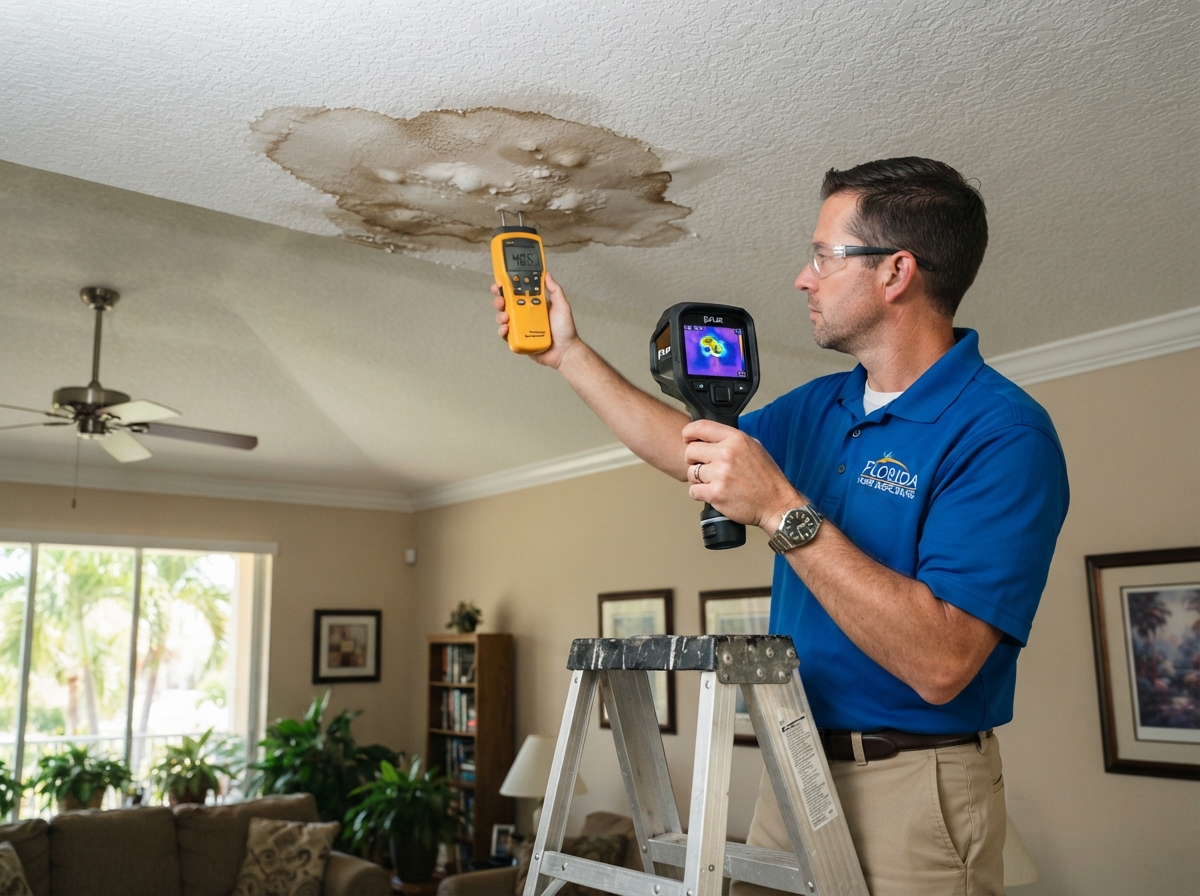
    Roof leaks and wind-driven rain can send water into attics, down wall cavities, and across ceilings long before a stain appears. Hidden water damage cleanup uses moisture meters and inspection of ceilings, walls, and attics to find trapped water and dry the affected materials.

    Learn About Roof Leak Water Damage

    Detailed Service Guide

    Complete Water Damage Restoration & Cleanup Services Near Palm Coast

    Palm Coast Water Damage Contractors provides professional water extraction, flood cleanup, sewage cleanup, structural drying, leak cleanup, storm-damage restoration and related water-damage services throughout Palm Coast and surrounding Northeast Florida communities. Water damage can originate from many different sources — and identifying the source, removing standing water, drying affected materials, controlling moisture, and determining which materials can be restored are all important parts of the restoration process.

    Water damage restoration in Palm Coast Florida

    Water Damage Restoration in Palm Coast

    Water damage restoration in Palm Coast covers the full process of returning a water-affected home, rental, or business to a dry, stable condition. That includes locating the water source where applicable, pulling out standing water, detecting moisture that has migrated behind surfaces, and drying affected flooring, drywall, baseboards, cabinets, and structural materials before secondary damage develops.

    Because water follows the path of least resistance, the visible puddle is rarely the full extent of the loss. Moisture travels under baseboards, into wall cavities, across subflooring, and up into drywall through capillary action. A structured restoration plan identifies every affected area, sets drying goals, and monitors moisture readings until the structure reaches an appropriate dry standard.

    Palm Coast Water Damage Contractors connects property owners with professional water damage restoration services throughout Palm Coast and surrounding Northeast Florida communities, for both residential and commercial water loss scenarios.

    Benefits for Palm Coast Property Owners

    • Faster removal of unwanted water from the property
    • Reduced risk of continued moisture migration into dry materials
    • Professional drying of affected drywall, flooring, and cavities
    • Better evaluation of which materials can be dried versus removed
    • Clear restoration planning from assessment through dry standard

    Restoration Process & Important Considerations

    • Water-source evaluation and source control where safely possible
    • Moisture-meter readings on drywall, framing, and subflooring
    • Standing water extraction with commercial pumps and vacuums
    • Air movement and dehumidification for bound moisture
    • Monitoring of affected materials throughout the drying phase
    • Cleanup approach varies by water source and contamination level

    Common Water Damage Situations We Address

    • Plumbing leaks and supply line failures
    • Appliance leaks and overflows
    • Storm and hurricane water intrusion
    • Fixture overflow events
    • Interior flooding from plumbing sources
    Emergency water removal and water extraction near Palm Coast

    Emergency Water Removal & Water Extraction Near Palm Coast

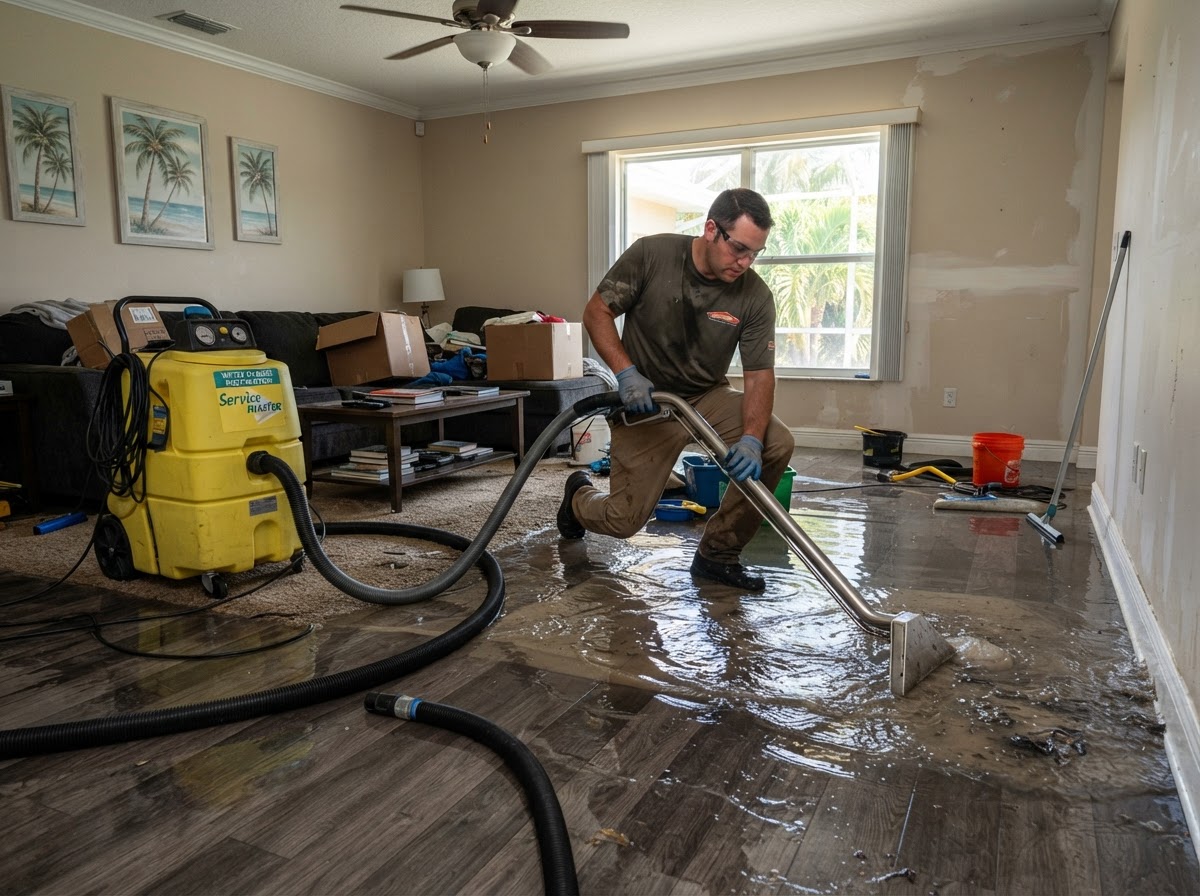
    Emergency water removal and water extraction near Palm Coast pulls standing water out of a property quickly after a leak, overflow, storm, or plumbing failure. Commercial-grade pumps and extraction wands draw bulk water from flooring, carpet, and affected surfaces so it cannot continue migrating into drywall, subflooring, and adjacent rooms.

    Extraction is the first step — but it is not the same as drying. Even after the floor looks dry, water has already been absorbed by porous materials throughout the area. Saturated carpet padding, damp drywall, and wet subflooring all hold moisture that extraction alone cannot remove. That bound moisture requires structural drying with air movers and dehumidifiers to draw it back out of the materials.

    Call (386) 245-9133 for current emergency water-removal availability in Palm Coast. The faster standing water is removed, the less moisture travels into surrounding materials and the shorter the drying timeline that follows.

    Benefits for Palm Coast Property Owners

    • Faster standing-water removal from flooring and carpet
    • Reduced moisture exposure to drywall and framing
    • Improved access to saturated materials for drying
    • Earlier start to the structural drying phase
    • Better assessment of the full affected area

    Restoration Process & Important Considerations

    • Water depth and volume determine extraction method
    • Flooring type affects how water is pulled from the surface
    • Moisture migration into walls and cabinets must be checked
    • Carpet and padding may be dried or removed based on saturation
    • Structural drying is required after extraction is complete
    • Contamination level affects handling of extracted water

    Common Water Damage Situations We Address

    • Burst pipes and supply line failures
    • Overflowing appliances and washing machines
    • Plumbing failures and connection leaks
    • Interior flooding from fixture overflows
    • Storm-related water intrusion into the property
    Flood damage cleanup services in Palm Coast Florida

    Flood Damage Cleanup in Palm Coast

    Flood damage cleanup in Palm Coast addresses water that has entered a property from a range of sources — interior plumbing floods, appliance overflows, storm-driven rain, and surface water intrusion. The cleanup approach depends on the water source and contamination level, which is why identifying the source is the first step in determining what can be dried and what needs to be removed.

    Clean water from an indoor plumbing flood may allow more materials to be dried in place. Water that enters from outside the building envelope may carry soil and contaminants, which changes how affected porous materials are handled. In every case, the priority is the same: remove the standing water, assess the affected materials, and begin structural drying.

    Flooded flooring, saturated drywall, wet baseboards, and damp wall cavities are all inspected during the cleanup process. Moisture mapping traces the full extent of water migration so no wet area is missed — even when it is hidden behind a wall or beneath flooring.

    Benefits for Palm Coast Property Owners

    • Removal of standing floodwater from the property
    • Removal of wet debris and affected contents where necessary
    • Professional moisture management across affected materials
    • Reduced risk of prolonged saturation in structural materials
    • Structured restoration planning from extraction to dry standard

    Restoration Process & Important Considerations

    • Water-source classification (clean, gray, or contaminated)
    • Extraction of standing water with commercial equipment
    • Debris removal and surface cleaning where appropriate
    • Moisture mapping to trace the full extent of water migration
    • Structural drying with air movers and dehumidifiers
    • Sanitation considerations depend on the water source

    Common Water Damage Situations We Address

    • Heavy-rain intrusion through the building envelope
    • Plumbing flooding from burst pipes or supply lines
    • Appliance flooding from failed hoses or connections
    • Fixture overflow events in bathrooms and kitchens
    • Storm-related interior water from wind-driven rain
    Sewage backup and black water cleanup near Palm Coast Florida

    Sewage Backup & Black Water Cleanup Near Palm Coast

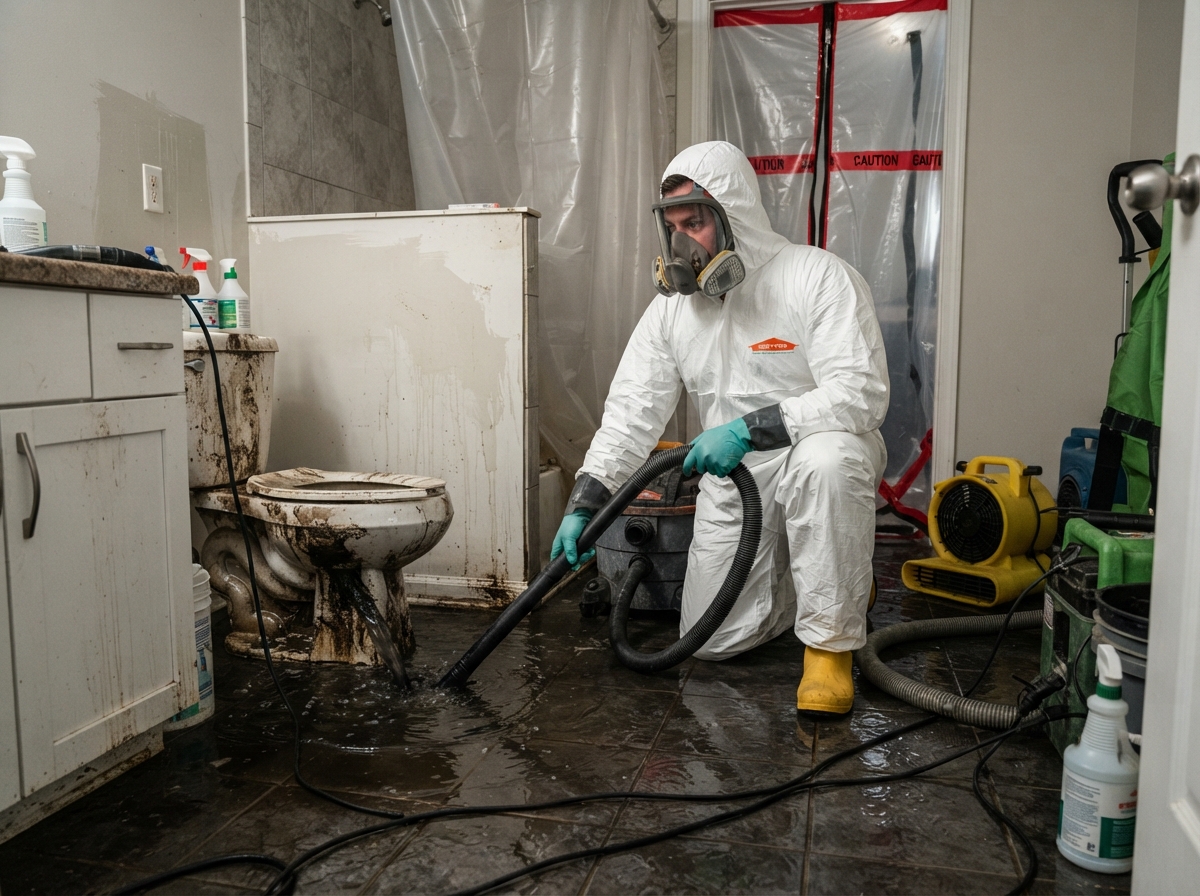
    Sewage backup and black water cleanup near Palm Coast addresses water intrusion from toilet backups, drain backups, sewer line issues, and wastewater overflow. Because sewage-contaminated water may contain biological contaminants, it requires more careful handling than a clean water loss — and the cleanup process follows specific containment and material-handling protocols.

    With clean water, the priority is simply removing the water and drying the structure. With black water, the priority shifts to containment — preventing contaminated water from spreading to unaffected areas — and to careful decisions about which porous materials have absorbed contaminated water and cannot be effectively salvaged. Carpet padding, saturated drywall, and insulation that have absorbed black water typically need to be removed rather than dried.

    This page does not provide DIY sewage cleanup instructions. Sewage water cleanup should be handled by professionals who understand containment protocols, appropriate protective equipment, and proper handling of affected materials. If you are dealing with a sewage backup, avoid the affected area and contact a professional.

    Benefits for Palm Coast Property Owners

    • Safer handling of contaminated materials with appropriate PPE
    • Reduced cross-contamination to unaffected areas of the property
    • Professional removal of affected porous materials where needed
    • Cleaning of impacted non-porous surfaces
    • Coordinated structural drying after the contamination is addressed

    Restoration Process & Important Considerations

    • Contamination source identification and assessment
    • Affected-material assessment to determine salvageability
    • Containment of the affected area where appropriate
    • Personal protective equipment used throughout the process
    • Removal procedures for non-salvageable porous materials
    • Cleaning and drying of the remaining structure

    Common Water Damage Situations We Address

    • Toilet overflows involving waste water
    • Sewer-line backups into the property
    • Wastewater overflows during heavy rainfall
    • Drain backups through floor and shower drains
    • Contaminated interior flooding from outside the building
    Burst pipe and plumbing leak cleanup in Palm Coast

    Burst Pipe & Plumbing Leak Cleanup in Palm Coast

    Burst pipe and plumbing leak cleanup in Palm Coast addresses water damage from burst pipes, leaking supply lines, failed plumbing connections, and hidden plumbing leaks. Even a small leak can migrate into walls, baseboards, flooring, cabinets, and adjacent rooms before the full extent becomes visible — which is why moisture detection is a core part of the cleanup process.

    The first priority is shutting down the water source where appropriate and safely possible. Note that stopping or repairing the plumbing source may require a licensed plumber; the restoration contractor focuses on the water that has already entered the structure — extracting it, finding hidden moisture behind walls and beneath flooring, and drying the affected materials.

    After extraction, a moisture inspection checks drywall, flooring, subflooring, cabinets, and ceiling materials for water that has traveled beyond the visible area. Structural drying with air movers and dehumidifiers then draws the bound moisture out of the affected materials so the property can return to a dry, stable condition.

    Benefits for Palm Coast Property Owners

    • Faster cleanup after plumbing failures and burst pipes
    • Reduced moisture exposure to drywall, framing, and flooring
    • Detection of water migration behind walls and under flooring
    • Focused drying of the specific affected materials
    • Clear restoration recommendations based on moisture findings

    Restoration Process & Important Considerations

    • Leak location and duration of water exposure
    • Water migration path through the building structure
    • Material saturation levels measured with moisture meters
    • Drying strategy adapted to the affected materials
    • Plumbing source repair may require a separate licensed plumber
    • Monitoring of moisture readings throughout drying

    Common Water Damage Situations We Address

    • Burst supply lines and pipe failures
    • Pin-hole leaks in plumbing lines
    • Broken plumbing fittings and connections
    • Failed shutoff valve connections
    • Hidden wall leaks developing slowly over time
    Storm and hurricane water damage restoration near Palm Coast

    Storm & Hurricane Water Damage Restoration Near Palm Coast

    Storm and hurricane water damage restoration near Palm Coast addresses water intrusion from heavy rainfall, tropical systems, hurricane conditions, and wind-driven rain common to coastal Florida. Wind-driven rain can force water through openings around doors and windows, through roof damage, and through small gaps in the building envelope — sending moisture into attics, wall cavities, and ceilings long before interior damage is visible.

    The restoration process includes interior water removal, moisture assessment of hidden areas like attics and ceiling cavities, and controlled structural drying after the storm passes. Because storm water can travel significant distances from its entry point, a thorough moisture inspection is essential to locating the full extent of the loss.

    Note that permanent roof or exterior repairs may require a separate contractor; the restoration focus is on the interior water and drying. Florida's high humidity makes dehumidification especially important in post-storm drying, because moist outdoor air can slow the drying of interior materials.

    Benefits for Palm Coast Property Owners

    • Removal of storm-related interior water from the property
    • Moisture evaluation of attics, ceilings, walls, and flooring
    • Drying of affected structural materials after storm intrusion
    • Reduced duration of saturation in building materials
    • Documentation of affected areas for the property owner

    Restoration Process & Important Considerations

    • Water-entry location identification (roof, windows, doors)
    • Ceiling and wall moisture inspection with meters and thermal imaging
    • Attic exposure and insulation saturation assessment
    • Flooring saturation and extraction requirements
    • Dehumidification for humid post-storm conditions
    • Permanent exterior repairs may require a separate contractor

    Common Water Damage Situations We Address

    • Hurricane water intrusion through the building envelope
    • Tropical-storm damage and heavy rainfall
    • Wind-driven rain entering around windows and doors
    • Roof-leak water damage from storm debris or wind
    • Window or door water intrusion during severe weather
    Structural drying and dehumidification services in Palm Coast

    Structural Drying & Dehumidification in Palm Coast

    Structural drying and dehumidification in Palm Coast is the phase of water damage restoration that removes the moisture absorbed by building materials after standing water has been extracted. While water extraction pulls the visible water out of a property, structural drying targets the bound moisture that remains inside drywall, wood framing, subfloors, flooring systems, and cabinets — the moisture that cannot be removed by extraction alone.

    Air movers create evaporation across wet surfaces, turning trapped moisture into water vapor. Commercial dehumidifiers then pull that vapor out of the air, lowering indoor humidity and preventing the moisture from reabsorbing into dry materials. Together, these two processes draw the water out of the building materials and out of the structure.

    Moisture meters establish a baseline and set drying goals, and readings are monitored throughout the drying phase. In Palm Coast's humid climate, dehumidification is especially important because moist coastal air can slow the evaporation of trapped moisture and allow secondary moisture to develop.

    Benefits for Palm Coast Property Owners

    • Removal of trapped moisture from inside building materials
    • Controlled humidity reduction in the affected environment
    • More effective drying of structural materials like framing and subflooring
    • Reduced risk of prolonged damp conditions in wall and floor cavities
    • Data-based drying decisions using moisture readings

    Restoration Process & Important Considerations

    • Material moisture content measured with moisture meters
    • Relative humidity controlled with commercial dehumidifiers
    • Air movement directed across wet surfaces and into cavities
    • Equipment placement targets the wettest materials first
    • Drying progress monitored and equipment adjusted as areas dry
    • Drying time depends on materials, extent, and ambient conditions

    Common Water Damage Situations We Address

    • Wet wall cavities after plumbing leaks or overflows
    • Saturated subfloors beneath hard flooring or carpet
    • Damp framing and studs after water migration
    • Wet cabinets and baseboards trapping moisture against walls
    • Post-extraction structural moisture throughout affected areas
    Commercial water damage restoration near Palm Coast Florida

    Commercial Water Damage Restoration Near Palm Coast

    Commercial water damage restoration near Palm Coast addresses water loss in office buildings, retail spaces, restaurants, professional facilities, and multi-unit properties. Water intrusion in a commercial setting can affect inventory, equipment, tenant spaces, and operations — and the restoration scope is adapted to the size and complexity of the loss.

    The process is the same as in residential restoration — assessment, extraction, moisture mapping, drying, and monitoring — but the scale, equipment requirements, and work-area considerations are different. Water can travel between units, through ceiling plenums, and across large floor areas, which makes moisture mapping especially important in commercial properties.

    Drying equipment placement considers work-area access, noise, and the need to keep certain areas operational where practical. The goal is to remove the water, find the hidden moisture, and dry the structure so the business can return to normal operations.

    Benefits for Palm Coast Property Owners

    • Scalable extraction and drying for larger affected areas
    • Organized restoration planning across multiple rooms or units
    • Reduced moisture exposure to inventory, equipment, and materials
    • Better documentation of affected areas for the property owner
    • Service coordinated around commercial property operational needs

    Restoration Process & Important Considerations

    • Property size and number of affected rooms or units
    • Water source and contamination level assessment
    • Occupancy and work-area access during drying
    • Flooring systems, wall assemblies, and ceiling systems affected
    • Equipment requirements sized to the volume of the loss
    • Moisture mapping across shared structures between units

    Common Water Damage Situations We Address

    • Office water damage from supply line or roof leaks
    • Retail-property leaks affecting merchandise and customer areas
    • Commercial plumbing failures in multi-tenant buildings
    • Storm intrusion affecting large commercial structures
    • Multifamily water-loss events traveling between units
    Water heater leak cleanup in Palm Coast Florida

    Water Heater Leak Cleanup in Palm Coast

    Water heater leak cleanup in Palm Coast addresses water damage caused by leaking, ruptured, or failed water heaters. A slow leak behind the tank can run for weeks, saturating nearby drywall, baseboards, and subflooring before it is noticed. A tank rupture releases the full contents of the tank at once, flooding the utility room, garage, or closet floor and sending water into adjacent rooms.

    In both cases, the concern is not just the visible water on the floor. Moisture that has been absorbed by drywall, baseboards, subflooring, and adjacent wall cavities requires inspection and drying to prevent secondary damage. Water can travel beneath flooring edges, under baseboards, and into neighboring spaces — making a thorough inspection essential.

    Note that repairing or replacing the water heater itself requires a plumber or appliance technician. The restoration contractor focuses on the water that has already entered the structure: extracting it, finding hidden moisture around the appliance, and drying the affected materials.

    Benefits for Palm Coast Property Owners

    • Faster cleanup after water-heater failure or leak
    • Extraction of standing water around the appliance
    • Moisture detection in drywall and subflooring near the unit
    • Drying of nearby flooring, baseboards, and wall materials
    • Reduced risk of concealed moisture remaining behind surfaces

    Restoration Process & Important Considerations

    • Appliance location and proximity to walls and flooring
    • Amount of discharged water from the tank or connection
    • Flooring type and whether water has traveled beneath the surface
    • Wall exposure and moisture wicking into drywall and baseboards
    • Adjacent-room migration through shared wall cavities
    • Structural drying required after extraction is complete

    Common Water Damage Situations We Address

    • Ruptured water-heater tanks releasing full contents
    • Leaking drain valves at the bottom of the tank
    • Failed supply connections at the water heater
    • Overflowing drain pans from T&P valve discharge
    • Slow tank leaks developing behind the unit over time
    Washing machine overflow and laundry room water damage cleanup near Palm Coast

    Washing Machine Overflow & Laundry Room Water Damage Cleanup Near Palm Coast

    Washing machine overflow and laundry room water damage cleanup near Palm Coast addresses water from supply hose failures, drain overflows, appliance leaks, and machine overflows. A supply hose failure can release a large volume of pressurized water across the laundry room floor in minutes, and the water quickly travels beneath flooring, behind baseboards, and into adjacent rooms.

    Laundry rooms are often located near kitchens, bathrooms, or hallways, which means water from an overflow can spread beyond the laundry room before it is noticed. Floating flooring, laminate, and vinyl can conceal water trapped beneath the surface, where it saturates the subfloor and underlayment. Second-floor laundry rooms can send water down into ceiling cavities and rooms below.

    Cleanup includes extracting the standing water, checking moisture beneath flooring and behind baseboards, and drying the affected materials. Because the water that has traveled beyond the visible puddle is the water most likely to cause secondary damage, the inspection always extends to adjacent rooms and shared wall cavities.

    Benefits for Palm Coast Property Owners

    • Quick extraction of appliance-related water from the laundry area
    • Moisture detection around and beneath laundry room flooring
    • Drying below and around affected flooring and subflooring
    • Reduced risk of hidden moisture remaining in wall cavities
    • Clear assessment of adjacent affected areas and rooms

    Restoration Process & Important Considerations

    • Water source identification (hose, drain, connection, machine)
    • Flooring type and whether water has traveled beneath the surface
    • Duration of exposure before the leak was discovered
    • Wall moisture and baseboard saturation assessment
    • Water migration into adjacent rooms and shared cavities
    • Drying access to subflooring and behind cabinetry

    Common Water Damage Situations We Address

    • Failed washing-machine supply hoses releasing water rapidly
    • Drain overflows during the pump-out cycle
    • Appliance leaks from internal valve or sensor malfunctions
    • Laundry sink overflow from a clogged or slow drain
    • Water beneath finished flooring from a slow connection leak
    Toilet overflow and bathroom water damage cleanup in Palm Coast Florida

    Toilet Overflow, Shower & Bathroom Water Damage Cleanup in Palm Coast

    Toilet overflow, shower, and bathroom water damage cleanup in Palm Coast addresses water from toilet overflows, tub overflows, shower leaks, sink overflows, and plumbing connection failures. Bathroom water can move beyond tile and become trapped beneath flooring, behind baseboards, and in the rooms below — which is why a moisture inspection is essential even when the visible water looks contained.

    The cleanup approach varies based on the water source. Clean water from a tub overflow or supply line leak may allow more materials to be dried in place. Contaminated water from a toilet overflow requires containment protocols and may require removal of porous materials that have absorbed contaminated water. A professional assessment determines the contamination level and the appropriate cleanup approach.

    Tile and stone are water-resistant on the surface, but grout lines, underlayment, and subflooring beneath can absorb and trap water. A shower leak or tub overflow can send water beneath the tile, where it saturates the subfloor and remains hidden — even after the surface looks completely dry.

    Benefits for Palm Coast Property Owners

    • Water extraction from bathroom flooring and affected areas
    • Subfloor moisture detection beneath tile and hard flooring
    • Clean and contaminated water protocols applied appropriately
    • Structural drying of wet walls, subfloors, and cavities
    • Inspection of rooms below for water migration through the floor

    Restoration Process & Important Considerations

    • Water source and contamination level assessment
    • Subfloor moisture trapped beneath tile and stone flooring
    • Wall cavity moisture behind bathroom drywall and baseboards
    • Water migration into the ceiling or room below
    • Drying approach varies for clean versus contaminated water
    • Porous materials exposed to contaminated water may need removal

    Common Water Damage Situations We Address

    • Toilet overflows from drain-line blockages
    • Toilet supply line failures releasing clean water
    • Tub overflows from blocked drains or unattended filling
    • Shower pan leaks and grout failures over time
    • Sink overflows and under-vanity plumbing connection leaks
    AC HVAC condensate drain line and appliance leak cleanup near Palm Coast

    AC/HVAC Condensate Drain Line & Appliance Leak Cleanup Near Palm Coast

    AC/HVAC condensate drain line and appliance leak cleanup near Palm Coast addresses water from clogged condensate drain lines, air handler condensation, dishwasher leaks, refrigerator supply line failures, and other appliance water losses. Because these leaks often develop slowly behind or above living spaces, the moisture can spread further than expected before it is discovered.

    A clogged AC condensate drain line can overflow for days, sending water down around the air handler and into the ceiling, drywall, or flooring below. Because the air handler is typically in an attic, closet, or utility space, the overflow can continue unnoticed, saturating ceiling drywall, insulation, and wall cavities. Appliance leaks share a similar pattern — slow leaks behind or beneath the appliance sending water into hidden spaces.

    Note that diagnosing the exact mechanical cause of an HVAC or appliance leak requires an HVAC technician or appliance professional. The restoration contractor focuses on the water that has already entered the structure: extracting it, finding hidden moisture in ceilings and walls, and drying the affected materials.

    Benefits for Palm Coast Property Owners

    • Extraction of condensate and appliance-related water
    • Ceiling and wall moisture detection near the air handler
    • Hidden moisture inspection in surrounding cavities
    • Structural drying of affected drywall, insulation, and subflooring
    • Reduced risk of concealed moisture remaining behind surfaces

    Restoration Process & Important Considerations

    • Source identification (condensate line, air handler, appliance)
    • Ceiling drywall and insulation saturation from attic overflows
    • Wall cavity moisture from water running down inside walls
    • Subflooring moisture beneath appliances and nearby flooring
    • HVAC or appliance repair may require a separate technician
    • Structural drying required after the source is controlled

    Common Water Damage Situations We Address

    • AC condensate drain line clogs and pan overflows
    • Air handler condensation dripping onto nearby materials
    • Dishwasher leaks beneath the appliance into subflooring
    • Refrigerator ice maker supply line leaks and failures
    • Appliance connection failures at supply valves
    Roof leak ceiling wall and hidden water damage cleanup in Palm Coast

    Roof Leak, Ceiling, Wall & Hidden Water Damage Cleanup in Palm Coast

    Roof leak, ceiling, wall, and hidden water damage cleanup in Palm Coast addresses moisture that has traveled behind surfaces — through attics, ceiling cavities, wall cavities, and into framing and flooring below. A ceiling stain or damp wall is often the last sign to appear, not the first. By the time a stain, drip, or bulge becomes visible, water has typically been traveling through the building structure for some time.

    Roof leaks can send water into the attic, where it saturates insulation and runs down rafters into wall cavities. The moisture may travel across ceiling drywall and down inside walls before any sign appears on the interior surface. Drywall can look completely dry on the surface while remaining saturated inside, because the moisture is trapped within the material and behind it.

    It is important not to assume every ceiling stain comes from a roof leak. The source could be a plumbing line, an HVAC condensate overflow, or an appliance on the floor above. Identifying the actual source is the first step — and stopping the source may require a roofer, plumber, or HVAC technician. The restoration contractor focuses on the water and drying.

    Benefits for Palm Coast Property Owners

    • Moisture mapping to find the full extent of hidden water
    • Attic and ceiling inspection for trapped moisture
    • Wall cavity drying to address water behind surfaces
    • Thermal imaging to detect moisture without opening every wall
    • Clear documentation of affected areas for the property owner

    Restoration Process & Important Considerations

    • Source identification (roof, plumbing, HVAC, or appliance above)
    • Moisture mapping of ceiling, attic, walls, and framing
    • Evaluation of ceiling and wall materials for salvageability
    • Structural drying with air movers and dehumidifiers
    • Access to wall and ceiling cavities where needed for drying
    • Removal of non-salvageable drywall or insulation where necessary

    Common Water Damage Situations We Address

    • Roof leaks from wind-driven rain, damaged flashing, or missing shingles
    • Plumbing leaks from pipes above ceilings or inside walls
    • HVAC condensate drain line overflows near the air handler
    • Bathroom or appliance leaks from the floor above
    • Hidden pipe leaks developing slowly inside wall cavities

    Cost & Pricing

    Water Damage Restoration Cost & Pricing in Palm Coast, FL

    Water damage restoration costs in Palm Coast can vary substantially depending on the size of the affected area, the amount of standing water, the water source, and whether the water is clean, gray, or black water. The number of affected rooms, flooring materials, drywall, ceiling, cabinet, and insulation involvement, structural materials affected, water extraction requirements, drying time, the number and type of air movers required, dehumidification requirements, moisture levels, accessibility, demolition or material removal when necessary, cleaning and sanitization, contents affected, residential versus commercial property, storm or hurricane-related conditions, how long materials have remained wet, and any reconstruction requirements all influence the final scope. Small, contained clean-water incidents generally cost less to mitigate than widespread flooding, sewage contamination, extensive material removal, or large commercial losses. Not every project requires demolition, reconstruction, sanitation, or specialized equipment — these factors may affect pricing depending on the specific loss.

    Pricing notice: Pricing shown below represents general planning ranges for water damage cleanup, extraction, drying and restoration projects in the Palm Coast area. These figures are not final quotes or guaranteed prices. Accurate pricing requires evaluating the affected areas, water source, contamination category, moisture conditions, materials involved, equipment needs and overall scope of work.

    ServiceLabor, Equipment & Major Cost FactorsTypical Project Planning Range
    Water Damage Restoration

    Affected square footage, number of rooms, water source, contamination level, extraction requirements, flooring and drywall involvement, moisture readings, air movers, dehumidification, material removal when required, cleaning, sanitization and the overall restoration scope.

    Small, contained clean-water incidents may fall near the lower end, while widespread saturation, multiple affected rooms, contaminated water or significant material removal can increase the total restoration scope.

    $1,000–$12,000+
    Emergency Water Removal & Water Extraction

    Amount and depth of standing water, affected square footage, extraction equipment, accessibility, flooring type, furniture or contents, number of rooms, water source, contamination category and whether additional structural drying is required afterward.

    Removing a limited amount of accessible clean water may cost less than extracting extensive standing water from multiple rooms or difficult-to-access areas.

    $500–$5,000+
    Flood Damage Cleanup

    Amount of water, affected area, contamination, flooring, drywall, insulation, cabinetry, contents, extraction, debris removal, cleaning, sanitization, drying equipment and structural materials exposed to moisture.

    Localized flooding with limited material impact may remain toward the lower end, while widespread interior flooding involving multiple rooms and saturated building materials can substantially increase the scope.

    $1,500–$15,000+
    Sewage Backup & Black Water Cleanup

    Size of the contaminated area, extraction, containment where appropriate, affected porous materials, flooring, drywall, cabinetry, cleaning, disinfecting, odor control, personal protective equipment, debris removal and drying requirements.

    A small contained sewage incident may require less work than widespread black-water contamination involving flooring, walls, cabinets or several rooms.

    $1,000–$10,000+
    Burst Pipe & Plumbing Leak Cleanup

    Amount of released water, duration of the leak, affected rooms, water extraction, wet drywall, flooring, ceilings, insulation, cabinetry, hidden moisture, structural drying and removal of damaged materials where necessary.

    A quickly contained plumbing leak may require relatively limited drying, while an unnoticed or major pipe failure can spread moisture through walls, floors, ceilings and adjacent rooms.

    $750–$7,500+
    Storm & Hurricane Water Damage Restoration

    Amount and source of water intrusion, affected square footage, roof or exterior openings, wind-driven rain, flooring, drywall, ceilings, insulation, debris, extraction, drying, sanitization and access to affected areas.

    Limited storm-related water intrusion may require a smaller mitigation scope, while widespread hurricane or heavy-rain damage affecting several rooms and building materials can become significantly more extensive.

    $2,000–$25,000+
    Structural Drying & Dehumidification

    Affected square footage, moisture levels, wall and floor assemblies, number of air movers, dehumidifiers, drying duration, monitoring, temperature, ventilation, material permeability and whether moisture has spread into concealed cavities.

    Smaller areas that dry quickly generally require less equipment and monitoring than widespread saturation involving multiple rooms, wall cavities or dense building materials.

    $800–$6,000+
    Commercial Water Damage Restoration

    Building size, affected square footage, water volume, number of affected areas, business contents, flooring systems, extraction capacity, drying equipment, accessibility, contamination level, material removal, scheduling requirements and overall loss complexity.

    A contained water loss in a small commercial space may require a modest mitigation scope, while large facilities or widespread losses can require substantially more extraction equipment, drying capacity, labor and monitoring. Large commercial losses can exceed the displayed planning range.

    $2,500–$50,000+
    Water Heater Leak Cleanup

    Amount of discharged water, location of the water heater, nearby flooring and walls, closets or utility areas, water extraction, hidden moisture, drywall, baseboards, insulation, drying equipment and duration of saturation.

    A quickly discovered water heater leak contained to a small utility area may cost less to mitigate than a tank failure that spreads water through adjacent rooms, walls or flooring.

    $500–$5,000+
    Washing Machine Overflow & Laundry Room Water Damage Cleanup

    Amount of discharged water, clean versus detergent-containing water, laundry-room flooring, drywall, baseboards, cabinetry, adjacent-room migration, extraction, drying equipment and moisture beneath finished flooring.

    A small overflow contained to the laundry room may remain near the lower end, while failed supply lines or prolonged discharge that spreads into adjoining rooms can require a larger cleanup and drying scope.

    $500–$5,000+
    Toilet Overflow, Shower & Bathroom Water Damage Cleanup

    Water source and contamination level, bathroom flooring, subflooring beneath tile, drywall, baseboards, ceiling or room below, extraction, drying equipment, material removal for contaminated porous materials and moisture monitoring.

    A clean-water tub or sink overflow contained to the bathroom floor may fall near the lower end, while a toilet backup involving contaminated water that reaches subflooring, wall cavities or the ceiling below can require a larger cleanup and drying scope.

    $600–$6,000+
    AC/HVAC Condensate Drain Line & Appliance Leak Cleanup

    Source and duration of the leak, ceiling drywall and insulation saturation from attic overflows, wall cavity moisture, subflooring beneath appliances, extraction, drying equipment, material removal where necessary and moisture monitoring.

    A slow condensate drip caught early may require limited drying, while a long-running overflow that saturates ceiling drywall, insulation and multiple wall cavities can substantially increase the cleanup and drying scope.

    $600–$6,000+
    Roof Leak, Ceiling, Wall & Hidden Water Damage Cleanup

    Source and duration of intrusion, attic insulation saturation, ceiling drywall, wall cavity moisture, framing, flooring below, moisture mapping, extraction, drying equipment, removal of non-salvageable drywall or insulation where necessary and monitoring.

    A minor roof leak caught early with limited drywall involvement may remain near the lower end, while long-running intrusion that saturates insulation, ceiling cavities, wall cavities and flooring below can require extensive drying and material removal.
    $800–$8,000+
    Water Damage Restoration

    Cost factors: Affected square footage, number of rooms, water source, contamination level, extraction requirements, flooring and drywall involvement, moisture readings, air movers, dehumidification, material removal when required, cleaning, sanitization and the overall restoration scope.

    $1,000–$12,000+

    Small, contained clean-water incidents may fall near the lower end, while widespread saturation, multiple affected rooms, contaminated water or significant material removal can increase the total restoration scope.

    Emergency Water Removal & Water Extraction

    Cost factors: Amount and depth of standing water, affected square footage, extraction equipment, accessibility, flooring type, furniture or contents, number of rooms, water source, contamination category and whether additional structural drying is required afterward.

    $500–$5,000+

    Removing a limited amount of accessible clean water may cost less than extracting extensive standing water from multiple rooms or difficult-to-access areas.

    Flood Damage Cleanup

    Cost factors: Amount of water, affected area, contamination, flooring, drywall, insulation, cabinetry, contents, extraction, debris removal, cleaning, sanitization, drying equipment and structural materials exposed to moisture.

    $1,500–$15,000+

    Localized flooding with limited material impact may remain toward the lower end, while widespread interior flooding involving multiple rooms and saturated building materials can substantially increase the scope.

    Sewage Backup & Black Water Cleanup

    Cost factors: Size of the contaminated area, extraction, containment where appropriate, affected porous materials, flooring, drywall, cabinetry, cleaning, disinfecting, odor control, personal protective equipment, debris removal and drying requirements.

    $1,000–$10,000+

    A small contained sewage incident may require less work than widespread black-water contamination involving flooring, walls, cabinets or several rooms.

    Burst Pipe & Plumbing Leak Cleanup

    Cost factors: Amount of released water, duration of the leak, affected rooms, water extraction, wet drywall, flooring, ceilings, insulation, cabinetry, hidden moisture, structural drying and removal of damaged materials where necessary.

    $750–$7,500+

    A quickly contained plumbing leak may require relatively limited drying, while an unnoticed or major pipe failure can spread moisture through walls, floors, ceilings and adjacent rooms.

    Storm & Hurricane Water Damage Restoration

    Cost factors: Amount and source of water intrusion, affected square footage, roof or exterior openings, wind-driven rain, flooring, drywall, ceilings, insulation, debris, extraction, drying, sanitization and access to affected areas.

    $2,000–$25,000+

    Limited storm-related water intrusion may require a smaller mitigation scope, while widespread hurricane or heavy-rain damage affecting several rooms and building materials can become significantly more extensive.

    Structural Drying & Dehumidification

    Cost factors: Affected square footage, moisture levels, wall and floor assemblies, number of air movers, dehumidifiers, drying duration, monitoring, temperature, ventilation, material permeability and whether moisture has spread into concealed cavities.

    $800–$6,000+

    Smaller areas that dry quickly generally require less equipment and monitoring than widespread saturation involving multiple rooms, wall cavities or dense building materials.

    Commercial Water Damage Restoration

    Cost factors: Building size, affected square footage, water volume, number of affected areas, business contents, flooring systems, extraction capacity, drying equipment, accessibility, contamination level, material removal, scheduling requirements and overall loss complexity.

    $2,500–$50,000+

    A contained water loss in a small commercial space may require a modest mitigation scope, while large facilities or widespread losses can require substantially more extraction equipment, drying capacity, labor and monitoring. Large commercial losses can exceed the displayed planning range.

    Water Heater Leak Cleanup

    Cost factors: Amount of discharged water, location of the water heater, nearby flooring and walls, closets or utility areas, water extraction, hidden moisture, drywall, baseboards, insulation, drying equipment and duration of saturation.

    $500–$5,000+

    A quickly discovered water heater leak contained to a small utility area may cost less to mitigate than a tank failure that spreads water through adjacent rooms, walls or flooring.

    Washing Machine Overflow & Laundry Room Water Damage Cleanup

    Cost factors: Amount of discharged water, clean versus detergent-containing water, laundry-room flooring, drywall, baseboards, cabinetry, adjacent-room migration, extraction, drying equipment and moisture beneath finished flooring.

    $500–$5,000+

    A small overflow contained to the laundry room may remain near the lower end, while failed supply lines or prolonged discharge that spreads into adjoining rooms can require a larger cleanup and drying scope.

    Toilet Overflow, Shower & Bathroom Water Damage Cleanup

    Cost factors: Water source and contamination level, bathroom flooring, subflooring beneath tile, drywall, baseboards, ceiling or room below, extraction, drying equipment, material removal for contaminated porous materials and moisture monitoring.

    $600–$6,000+

    A clean-water tub or sink overflow contained to the bathroom floor may fall near the lower end, while a toilet backup involving contaminated water that reaches subflooring, wall cavities or the ceiling below can require a larger cleanup and drying scope.

    AC/HVAC Condensate Drain Line & Appliance Leak Cleanup

    Cost factors: Source and duration of the leak, ceiling drywall and insulation saturation from attic overflows, wall cavity moisture, subflooring beneath appliances, extraction, drying equipment, material removal where necessary and moisture monitoring.

    $600–$6,000+

    A slow condensate drip caught early may require limited drying, while a long-running overflow that saturates ceiling drywall, insulation and multiple wall cavities can substantially increase the cleanup and drying scope.

    Roof Leak, Ceiling, Wall & Hidden Water Damage Cleanup

    Cost factors: Source and duration of intrusion, attic insulation saturation, ceiling drywall, wall cavity moisture, framing, flooring below, moisture mapping, extraction, drying equipment, removal of non-salvageable drywall or insulation where necessary and monitoring.

    $800–$8,000+

    A minor roof leak caught early with limited drywall involvement may remain near the lower end, while long-running intrusion that saturates insulation, ceiling cavities, wall cavities and flooring below can require extensive drying and material removal.
    These figures are preliminary project-planning ranges rather than advertised fixed prices for water damage restoration projects in the Palm Coast area. Final pricing may be higher or lower depending on the affected square footage, water source and contamination category, moisture conditions, materials involved, extraction requirements, drying equipment, necessary material removal, cleaning or sanitization requirements, accessibility and the complete scope of restoration. A property evaluation is required to determine accurate project pricing.

    Request an Accurate Water Damage Restoration Estimate in Palm Coast

    Accurate pricing depends on understanding your property address, the source of the water, the approximate affected area, the number of affected rooms, whether standing water remains, the flooring and wall materials involved, when the water loss occurred, visible damage, the desired service, and photos of the affected area when available. Request a free estimate to get pricing based on your specific situation.

    Step by Step

    How Water Damage Restoration Works

    A clear, repeatable process takes a wet Palm Coast property from standing water to a dry, stable structure. Here is what happens at each stage.

    1

    Assess the Water Damage

    The first step is to identify the likely source of the water, the visibly affected areas, and — just as importantly — the areas where moisture may have traveled but is not yet visible. A thorough assessment sets the scope for extraction and drying.

    2

    Stop or Control the Water Source

    Where it is safe and possible, the water source is stopped or controlled before drying can succeed. For plumbing leaks this usually means shutting off the water supply. Note that stopping the source may require a licensed plumber; the restoration contractor focuses on the water and drying, not plumbing repairs.

    3

    Remove Standing Water

    Standing water is extracted using commercial pumps and vacuums designed for water removal. The goal is to pull bulk water out of the structure quickly so it cannot continue migrating into drywall, subflooring, and adjacent rooms.

    4

    Detect Hidden Moisture

    Moisture meters and inspection are used to check walls, floors, baseboards, cabinetry, ceilings, and adjacent materials for trapped water. Water follows the path of least resistance, so areas below and next to the visible damage are always checked.

    5

    Dry & Dehumidify

    Air movers create evaporation across wet surfaces while dehumidifiers pull moisture out of the air. Together they draw bound water out of drywall, framing, and flooring. In humid Palm Coast conditions, dehumidification is essential to keep drying on track.

    6

    Clean & Prepare the Property

    Cleanup requirements depend on the water source and the materials affected. Clean water may require limited cleaning, while contaminated water demands more thorough preparation. Affected porous materials that cannot be dried are removed at this stage.

    7

    Verify Drying Progress

    Moisture levels are monitored across the affected materials over the course of drying. The goal is to confirm that moisture content has returned to an appropriate dry standard for the structure before equipment is removed.

    What happens during water extraction?

    During water extraction, commercial pumps and vacuums pull standing water out of flooring, carpet, and affected areas. This removes the bulk water so it cannot continue migrating into drywall, subflooring, and adjacent rooms. Extraction is always followed by structural drying, which uses air movers and dehumidifiers to draw the remaining bound moisture out of the materials themselves.

    The gallery illustrates the types of residential and commercial water-damage situations Palm Coast Water Damage Contractors is equipped to evaluate, extract, dry, and restore throughout Palm Coast and surrounding communities. Water damage restoration may involve identifying affected areas, extracting standing water, removing unsalvageable materials where necessary, controlling moisture, operating professional drying equipment, and preparing affected areas for the next restoration step.

    Gallery images are representative service examples intended to illustrate common water-damage restoration, water extraction, flood cleanup, sewage cleanup, leak cleanup, storm restoration and structural drying situations. Actual project appearance varies by property, source of water, affected materials and site conditions.

    Water Damage Restoration Projects in Palm Coast

    Professional water damage restoration may involve determining the affected area, identifying visible moisture conditions, extracting standing water, protecting salvageable materials, removing damaged materials where necessary, and beginning controlled structural drying throughout Palm Coast properties.

    Explore water damage restoration services in Palm Coast

    Emergency Water Removal & Water Extraction Near Palm Coast

    Water extraction focuses on removing standing or pooled water from affected areas before prolonged moisture exposure can continue affecting flooring, walls, contents, and structural materials near Palm Coast.

    View emergency water removal and water extraction near Palm Coast

    Flood Damage Cleanup in Palm Coast

    Flood-damage cleanup may require standing-water removal, evaluation of affected porous materials, debris removal, sanitation where appropriate, moisture detection, and controlled drying based on the type and extent of water intrusion in Palm Coast properties.

    Explore flood damage cleanup services in Palm Coast

    Sewage Backup & Black Water Cleanup Near Palm Coast

    Sewage and black-water losses require additional contamination controls, appropriate PPE, affected-material evaluation, cleaning procedures, and careful separation of contaminated areas from unaffected portions of the property near Palm Coast.

    View sewage backup and black water cleanup near Palm Coast

    Burst Pipe & Plumbing Leak Water Cleanup in Palm Coast

    Plumbing-related water damage may originate from failed supply lines, pipe breaks, valves, fixture connections, or concealed leaks and can affect drywall, insulation, flooring, cabinetry, and other nearby materials in Palm Coast homes.

    Explore burst pipe and plumbing leak cleanup in Palm Coast

    Storm & Hurricane Water Damage Restoration Near Palm Coast

    Severe Florida weather can allow rainwater into properties through damaged roofing, windows, exterior openings, or wind-driven intrusion and may require extraction, moisture evaluation, temporary protection, and structural drying near Palm Coast.

    Explore storm and hurricane water damage restoration near Palm Coast

    Structural Drying & Dehumidification in Palm Coast

    Controlled drying may use commercial air movers, dehumidifiers, and moisture measurements to reduce excess moisture in affected building materials following water extraction in Palm Coast properties.

    Learn about structural drying and dehumidification in Palm Coast

    Commercial Water Damage Restoration Near Palm Coast

    Commercial water losses can affect offices, retail spaces, professional buildings, and other business properties and may require coordinated extraction, drying, moisture monitoring, and restoration planning near Palm Coast.

    View commercial water damage restoration near Palm Coast

    Water Heater Leak Cleanup in Palm Coast

    A leaking or failed water heater can release water into garages, utility rooms, closets, and adjacent living areas, potentially affecting drywall, flooring, baseboards, and nearby contents in Palm Coast homes.

    Explore water heater leak cleanup in Palm Coast

    Washing Machine Overflow & Laundry Room Water Damage Near Palm Coast

    Washing-machine supply-line failures, drain problems, and appliance overflows can quickly spread water beneath appliances, cabinetry, flooring, baseboards, and adjoining rooms near Palm Coast.

    View washing machine overflow and laundry room water damage cleanup near Palm Coast

    Discuss Your Water Damage Cleanup Project in Palm Coast

    Contact Palm Coast Water Damage Contractors to discuss the source of the water, the areas affected, and the type of cleanup or drying assistance you need. Providing photographs and basic property details can help the team better understand the situation before scheduling the next step.

    Common Causes

    Common Causes of Water Damage Near Palm Coast Homes

    Understanding the source helps determine which materials are affected and where hidden moisture is likely to travel. Below are the most frequent sources of water loss in Palm Coast and surrounding Florida communities.

    Burst Pipes & Supply Line Leaks

    A burst pipe or failed supply line can release a large volume of water into walls, ceilings, and flooring in minutes. After the water is shut off, extraction focuses on the affected cavities and saturated materials. Learn more about burst pipe and plumbing leak cleanup.

    Water Heater Leaks

    Water heaters can leak slowly behind the unit or fail suddenly when the tank ruptures, sending water across the floor and into nearby walls. See our water heater leak cleanup page for how the surrounding materials are dried.

    Washing Machine & Appliance Hoses

    Supply hose failures on washing machines, dishwashers, and refrigerators are a common source of sudden indoor flooding. Our washing machine overflow cleanup page covers the affected areas.

    Toilet, Shower & Bathroom Overflows

    Toilet overflows, shower pan leaks, and tub overflows introduce water — and sometimes contamination — onto bathroom flooring and into subfloors. Visit the bathroom water damage cleanup page for details.

    HVAC Condensate Drain Lines

    A clogged AC condensate drain can overflow for days, saturating ceilings and drywall near the air handler. Our AC condensate and appliance leak cleanup page explains the cleanup process.

    Roof Leaks & Wind-Driven Rain

    Roof leaks can send water into attics and down wall cavities long before a stain appears. Learn how hidden moisture is located on our roof leak and hidden water damage page.

    Storm & Hurricane Intrusion

    Florida storms and hurricanes drive wind-driven rain, roof intrusion, and flooding into Palm Coast properties. See storm and hurricane water damage restoration for the drying approach after a storm.

    Sewage Backups

    Sewage backups introduce contaminated black water that requires containment and specialized cleanup. Our sewage backup and black water cleanup page describes the process.

    Service Areas

    Water Damage Restoration in Palm Coast & Surrounding Florida Communities

    Palm Coast is the primary market. Water damage restoration services are also available in surrounding communities across Flagler County and nearby regions along Florida's northeast coast.

    Palm Coast sits in Flagler County along Florida's Atlantic coast, where humid conditions, seasonal storms, and hurricane exposure make water intrusion a recurring concern for property owners. Water damage services extend from Palm Coast to nearby communities including Flagler Beach, Bunnell, Ormond Beach, Daytona Beach, St. Augustine, Port Orange, and Jacksonville.

    Primary Service Area

    Palm Coast, Florida

    Flagler County & Surrounding Communities

    Service-area representation — no physical storefront address listed.

    Frequently Asked Questions

    Palm Coast Water Damage Restoration FAQs

    Direct answers to the questions Palm Coast property owners ask most about water removal, drying, and cleanup.

    Get Help Now

    Need Water Damage Help in Palm Coast?

    Whether you are dealing with an active leak, standing water, wet flooring, ceiling water damage, a plumbing failure, storm-related intrusion, an appliance leak, or a commercial water loss, the next step is the same — get the water out and start drying.

    • Active leaks and burst pipes
    • Standing water and flooding
    • Wet flooring, carpet, and hardwood
    • Ceiling and wall water damage
    • Appliance and water heater leaks
    • Storm and hurricane water intrusion
    • Commercial property water loss

    Palm Coast Water Damage Contractors

    Palm Coast, FL 32135

    (386) 245-9133

    Request Water Damage Service

    Fill out the form and we'll follow up to help with your water damage situation.

    Your information is used only to contact you about your service request.

    Water Damage? Call Now(386) 245-9133